
Article: Retail Workers and Foot Pain — A Simple Solution Often Overlooked
Retail Workers and Foot Pain — A Simple Solution Often Overlooked
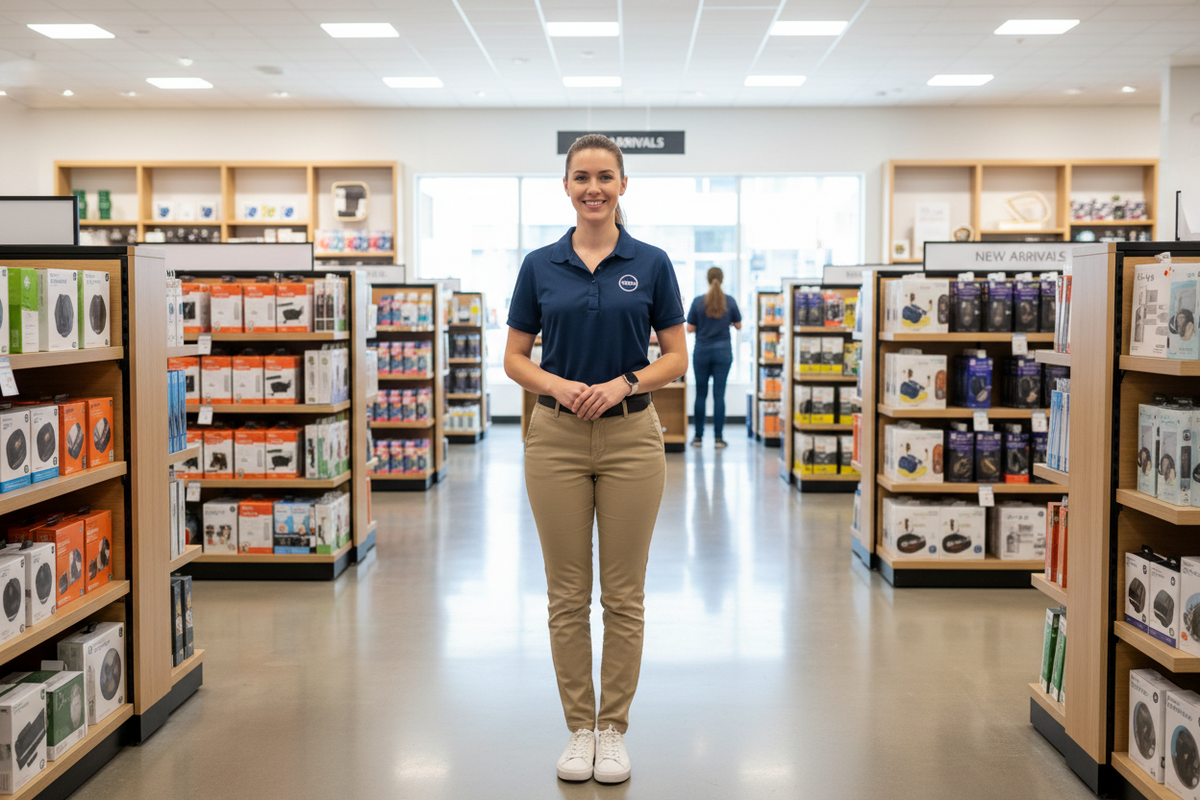
Retail workers are among the most physically active professionals in any economy — yet they are rarely recognised as such. An eight-hour shift on a hard supermarket or shop floor can involve 12,000 to 15,000 steps, constant standing and walking, all in an enclosed shoe environment that builds heat and moisture throughout the day.
The Retail Floor Problem
Most retail environments have hard, non-cushioned floors — concrete, tile or compacted composite. These surfaces do not absorb impact. Every step sends vibration directly up through the foot, ankle and knee. Combined with eight hours of standing, the cumulative stress on the plantar fascia, heel and metatarsals is considerable. Fatigue, swelling and chronic foot pain are occupational realities for many retail workers.
How the Wrong Sock Makes It Worse
A thin cotton sock provides no cushioning, loses its moisture management quickly and creates a warm, wet environment that harbours bacteria and causes odour by mid-shift. Synthetic socks may manage moisture slightly better but still provide no antibacterial protection. Neither is designed for the sustained demands of a retail shift.
What to Prioritise in a Retail Sock
Cushioning at the ball and heel — the zones taking most impact on a hard retail floor. Moisture-wicking bamboo fibres that keep the foot dry for 8+ hours. Silver antibacterial protection so odour does not become a problem by the afternoon. Light compression in the arch and ankle to support circulation. Seamless construction so friction does not compound fatigue.
The Case for Employers
Foot pain and fatigue directly affect productivity. Workers experiencing discomfort are less efficient, make more errors and are more likely to call in sick. Providing quality antibacterial socks as part of a staff uniform or benefit package is a low-cost, high-impact investment in occupational health. The cost of one pair of quality socks is less than one hour of reduced productivity.
Quick Wins During a Retail Shift
Use breaks to sit — genuinely sit, not lean — and elevate feet where possible. Do ankle circles while standing to stimulate circulation. Ask to alternate between tasks that involve walking versus static standing. Rotate shoes between days if possible, and ensure footwear is properly fitted — too tight or too loose both accelerate fatigue.
Conclusion
Retail workers deserve better than the socks most of them wear to work. A small investment in quality makes a measurable difference to a long shift.

Ecrit par Rudiger Mees


Laisser un commentaire
Ce site est protégé par hCaptcha, et la Politique de confidentialité et les Conditions de service de hCaptcha s’appliquent.