

The Best Socks for Hiking and Trekking — What to Look For
Introduction
Ask any experienced hiker what is in their pack and they will tell you: never skimp on socks. On a long trail, your feet are everything. The wrong sock leads to blisters, hot spots, soaked skin and ruined days. The right sock disappears — you simply forget you are wearing it.
Why Hiking Demands More From a Sock
Hiking involves prolonged, repetitive pressure across varied terrain. Your feet can produce up to half a litre of sweat per day on a demanding trail. Inside a stiff hiking boot, heat and moisture build quickly. The sock has to manage all of this while also providing enough cushioning to absorb impact and enough friction control to prevent blistering across 20 or 30 kilometres.
Merino Wool vs. Silver-Infused Bamboo
Merino wool has long been the gold standard for hiking socks — warm, moisture-wicking and naturally antibacterial. But it comes with drawbacks: it is expensive, can be itchy for sensitive skin, and loses its antibacterial properties after heavy use. Silver-infused bamboo offers comparable moisture management, superior softness and active antibacterial protection that does not diminish. For multi-day treks where you re-wear socks, this matters enormously.
Cushioning and Compression
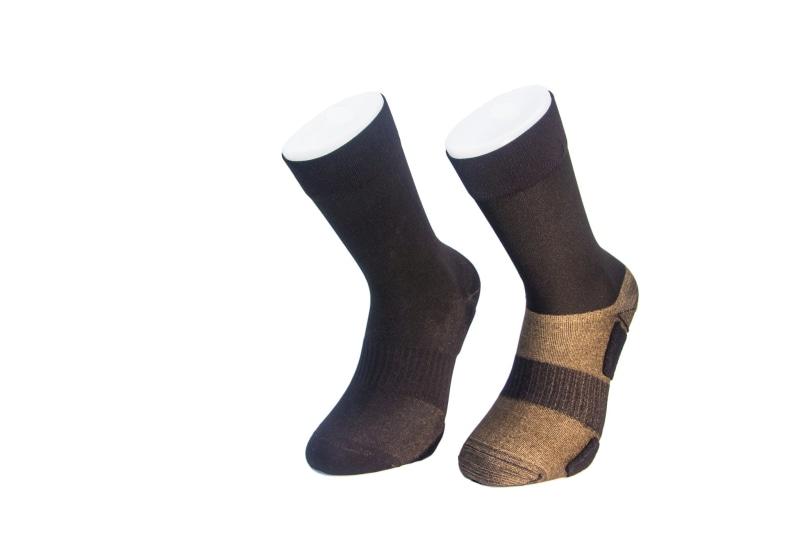
The sole of a hiking sock should have targeted cushioning at the ball, heel and toe — the zones that take the most impact. Too much cushioning everywhere creates a thick, hot, friction-generating environment. Light to medium cushioning with strategic padding is the sweet spot for most hikers. A gentle compression in the arch and ankle helps reduce fatigue on long descents.
Multi-Day Trekking: The Antibacterial Advantage
On a multi-day trek, you may not wash your socks every night. Silver-infused socks stay fresher between washes because the silver fibres continuously inhibit bacterial growth. This is not just about odour — wet bacterial environments increase the risk of fungal infections and maceration (skin breakdown from prolonged moisture). Silver protection is a practical health benefit for anyone covering serious mileage.
Care on the Trail
If you do wash socks on a multi-day trek, rinse them in cold water and let them air dry completely before wearing again. Damp socks blisters are far worse than dry ones. Always carry a spare pair in a dry bag. When camping, hang wet socks outside your tent — moisture inside a closed space means they will still be wet in the morning.
Conclusion
For hiking, your sock is as important as your boot. Invest in quality, prioritise moisture management and antibacterial protection, and your feet will carry you further than you thought possible.

Ecrit par Rudiger Mees

Laisser un commentaire
Ce site est protégé par hCaptcha, et la Politique de confidentialité et les Conditions de service de hCaptcha s’appliquent.