
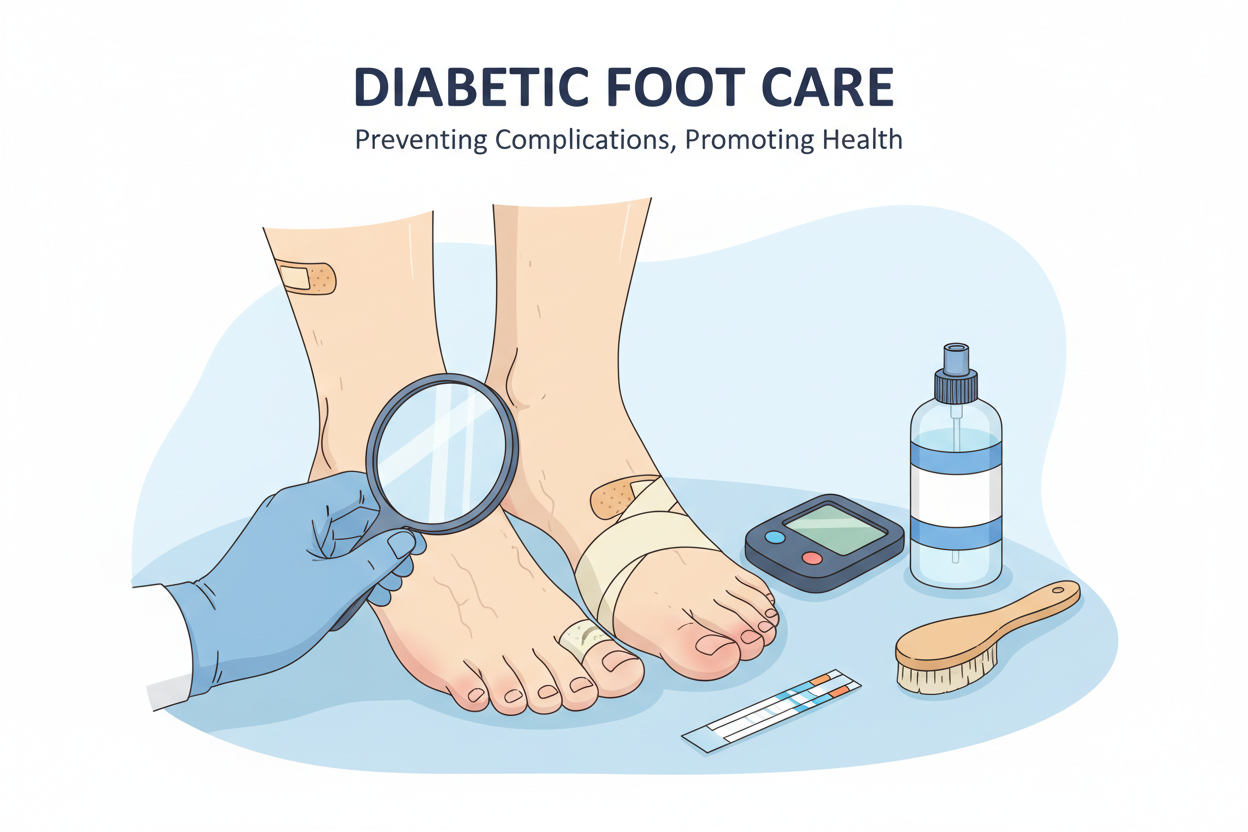
Foot Problems in Diabetes — Early Recognition and Prevention
Introduction
Thousands of diabetics end up in hospital every year with serious foot problems that could have been prevented. Early recognition and daily prevention are the keys to long-term healthy feet.
The Most Common Foot Problems in Diabetes
Diabetic neuropathy (nerve damage), peripheral vascular disease (poor circulation), diabetic foot ulcers, calluses, fungal infections and ingrown toenails all occur more frequently in diabetics. All of these problems can start as minor irritations but escalate if not treated in time.
How to Recognise a Problem Early
Check your feet daily in good light, including the sole and between the toes. Watch for: redness, swelling, blisters, wounds, changes in skin colour, or areas that feel unusually warm or cold. Use a mirror or ask someone else to help if you have difficulty seeing your feet clearly.
The Role of Socks in Daily Prevention
Socks are the first protective layer between your skin and your shoe. They must wick away moisture, inhibit bacteria, exert no pressure, and be seamless. Silver socks offer all these functions in one product, making them a simple but powerful preventive measure that works every day.
Lifestyle and Diabetic Foot Health
Smoking dramatically reduces blood circulation to the feet. Regular exercise stimulates blood flow. Well-controlled blood sugar slows nerve damage. Together with the right socks, these factors form the foundation for healthy feet in the long term.
When to Consult a Podiatrist?
Ideally, every diabetic should have their feet checked annually by a podiatrist. Already experiencing symptoms? Don't wait. A podiatrist can also advise on the best socks and shoes for your specific foot.
Conclusion
Prevention starts with awareness and small daily habits. The right socks are a simple but crucial step.

Door Rudiger Mees



Laat een reactie achter
Deze site wordt beschermd door hCaptcha en het privacybeleid en de servicevoorwaarden van hCaptcha zijn van toepassing.