
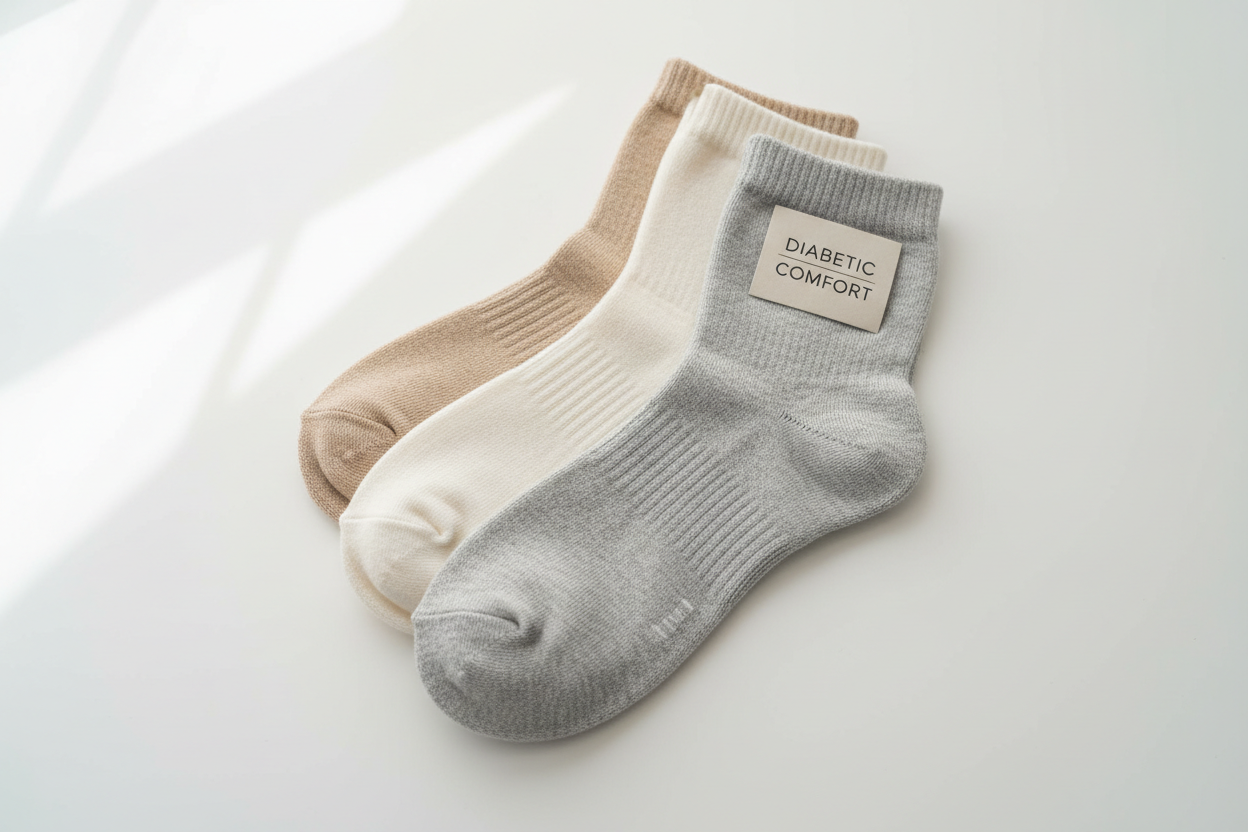
The Best Socks for Diabetics — Complete Guide
Introduction
Not all socks are suitable for diabetics. The wrong socks can restrict blood flow, cause pressure points, or trap moisture. This guide helps you always choose the best option.
Why Are Regular Socks Not Ideal for Diabetics?
Standard socks often have tight elastics that restrict blood circulation in the ankles. Seams and stitching create pressure points that go unnoticed with reduced sensitivity but still cause damage. Cotton retains moisture, promoting bacterial and fungal growth. All these features are problematic for someone with diabetes.
Features of a Good Diabetic Sock
A good diabetic sock has: a non-constricting, soft topband; seamless or minimal seams at the toe; moisture-wicking and antibacterial materials; light cushioning for extra protection of the sole; and a good fit — not too tight or too loose. All these features together form the foundation of a safe diabetic sock.
Silver vs. Bamboo vs. Wool vs. Cotton
Cotton is soft but absorbs too much moisture. Wool is warm and moisture-regulating but sometimes rough on sensitive skin. Bamboo is soft and sustainable but lacks active antibacterial power. Silver is the only material that provides active antibacterial protection combined with excellent moisture-wicking. For diabetics, silver is therefore the best choice.
How to Use Diabetic Socks Correctly
Wear a clean pair every day. Put them on with the correct side out so seams stay away from the skin. Check your socks before putting them on for any foreign objects. Wash at 40°C to extend the life of the silver fibres, and never use bleach.
Conclusion
The right sock is part of your daily diabetes management. Choose quality that protects your feet, not just covers them.

Door Rudiger Mees

Laat een reactie achter
Deze site wordt beschermd door hCaptcha en het privacybeleid en de servicevoorwaarden van hCaptcha zijn van toepassing.